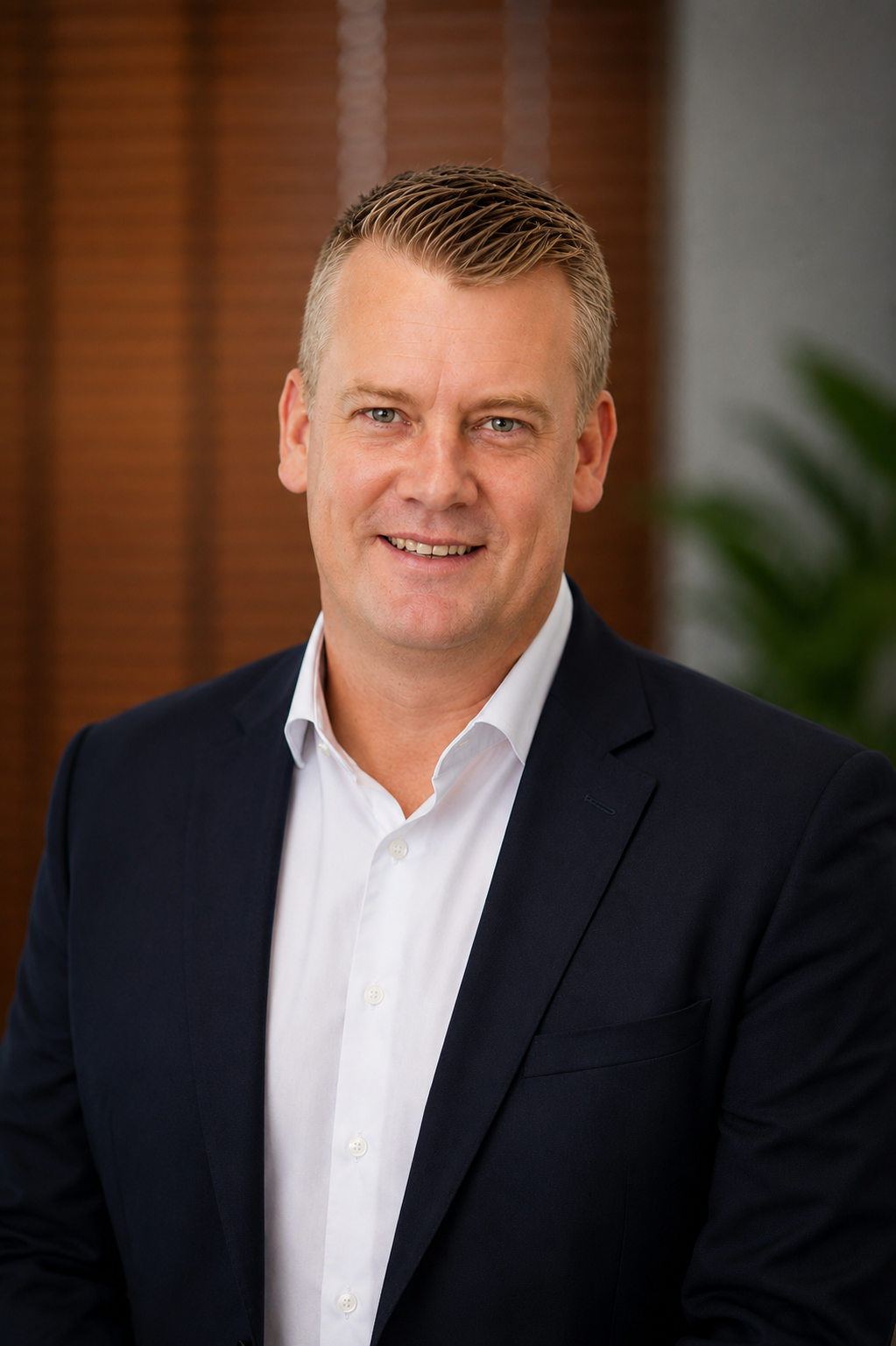
At a top investment summit in London, Heystek finds South Africa barely mentioned — a sobering sign of the times.
Key topics:
- Ninety One’s rise from local startup to global asset manager
- Offshore investing dominates as SA falls off global investor radar
- High costs abroad highlight rand’s decline and SA’s economic struggles
I was fortunate to be able to attend the annual Global Investing Conference hosted by Ninety One a week or two ago.
As usual, the conference, held at the company’s head office in middle of the financial district of London, was jam-packed, with almost 90 financial advisors, mostly from South Africa (SA), lapping up the global insights from a wide range of truly exceptional speakers.
I haven’t been able to attend this annual event for some years, due to various reasons, and it was my first visit to the UK and the European continent since pre-Covid.
Some of the SA wealth managers said the lineup of speakers was truly exceptional; not only the ones discussing financial matters, but also the economic and political repercussions of the political direction taken by US President Trump.
As it were, Trump and his shenanigans featured in almost all of the talks, except for one – perhaps because it dealt with a fascinating overview of the origins of the world by renowned UK scientist Prof. Lewis Dartnell, author of several books on the origins of mankind, including his latest one called Origins.
Hendrik du Toit, CEO of Ninety One, got the ball rolling with a fascinating interview with Sir John Sawers from Newbridge Advisors, a former head of MI6, in other words, James Bond’s boss! What followed was a veritable prime selection of speakers from Blackrock, Janus Henderson, Fidelity, Ninety One and others, the one more compelling than the other.
South Africa not on the radar
What is missing, you may ask? Well, not one word on South Africa or the local markets. Only when pressed by some direct questions were some highly hesitant answers and views given. I don’t know if this was preplanned by the organisers, as they might argue that they have enough presentations on SA and the local financial markets in SA, or that SA is truly no longer on the radar of global investors and advisors.
A random survey with some of the fellow financial advisors, who mostly have large advisory companies and who deal with high-net-worth individuals (HNWIs) in South Africa, supported this view: Most have repatriated a great deal of their clients’ capital offshore.
Informally I chatted to some of the presenters (who managed massive global funds) and asked their view on SA and whether they would consider investing in the JSE.
Chatham House rules apply here (no names, no pack drill), but apart from Naspers/Prosus (which they can buy offshore), and perhaps Capitec, there was not much on the local bourse to excite them, they said. Whatever industry or asset class they might have liked, they could find it, with a choice tenfold and more, on global markets.
And SA has virtually no exposure to the world of AI and other technologies which are changing the world as we know it.
What was a major talking point was US President Donald Trump and the real possibility of an end to the 15 years of American Exceptionalism, as they called it. This refers to the past 15 years where US stock markets – the Nasdaq, S&P 500 and Dow Jones Industrial Index – smashed all other markets globally by a very wide margin. Now, they said, markets and funds focused on Europe (already evident so far in this year), India, Japan and perhaps even China could take over the running, as far as outperformance goes. The days of simply picking the S&P 500 Index or ETF are over. Returns from global markets over the next ten years will also be much more pedestrian, they all said. Investment advisors and fund managers would all have to work much harder to find returns for their clients.
Charles Gave from Gavekal, an investment personality I have been following for many years, was perhaps the highlight of the event for me. Here was a truly exceptional fund manager, not built or dressed like any of the senior executives of Ninety One, who always seem to be impeccably dressed. Short, portly and dressed more for the beach at Nice or Cannes, he gave one of the most entertaining and riveting talks I have ever had the pleasure of attending. His talk was interspersed with expletives which was highly entertaining and educational, at the same time.
And to top it all, he also owns a rugby club in France and was still visibly p#ssed off by the fact that the Springboks beat his beloved Tricolors by a single point in the quarterfinal of the last Rugby World Cup. I would love to attend a rugby game and share a bottle of wine with this man.
As if to rub it in, the Ninety One team gave him a Springbok rugby jersey signed by all the players who won the RWC. Gave, by the way, was very bullish on India and, to a lesser extent, China as an investment destination.
Another big theme was AI and how it will be rolled out across the world in the next couple of years. There was optimism about AI, but also some trepidation about where it could all end up.
Birth of a financial giant
But it was during a very special dinner in the gardens of Westminster Abbey with, amongst others, long-standing director of Ninety One, Jeremy Gardner, that I had to remind him that I was there at the very beginning of Ninety One, now a global giant and SA’s largest asset manager by far, with £1,3 billion under management. One of the few local companies who have made it really big on the world stage. I don’t think we truly appreciate just how well this offspring from Investec Bank has done under Du Toit and his senior management.
The story goes back to September 1991, when I was the finance editor of The Star Newspaper in Johannesburg. Late one afternoon/early evening I saw someone wandering into the finance newsroom and, as all the other journos were out on assignments, I walked up to him and asked if I could help.
“Yes”, he said, “my name is Peter Anschuts, and I want someone to write a story about a new company Investec is about to launch, to be called Investec Asset Management (IAM).”
“Sure,” I said, “come and sit down and tell me the story,” as the Investec angle intrigued me. In short, Investec was about to enter the asset management industry, and it would be headed by this young and dynamic Hendrik du Toit, formerly a lecturer on finance at University of Pretoria and, at that time, an analyst/fund manager at Old Mutual. IAM would also be entering the linked-investment industry, where investors could choose investment funds from a range of managers, instead of being forced to only deal with inhouse funds from the life insurance industry.
I wrote a short story which was published the following day, but unbeknown to me, this was to be not only the start of a new company, but also an event that fundamentally changed the investment industry in SA, much to the benefit of ordinary investors.
I still remember the pushback from the life insurance industry as to how this idea of a “linked platform” would not work, and that the investment giants of the time – Old Mutual, Sanlam, and Liberty – with their massive and well-incentivised sales forces, would crush these young upstarts.
Well, they would say that, as upfront commissions of 5% and annual fees of between 3-4% per annum were still the norm.
But these stodgy investment companies were not prepared for the financial storm about to hit them, and they were all eventually forced to launch their own linked-investment platforms, which today is the dominant investment channel for ordinary South Africans and their advisors to make and manage investments. Costs have plummeted, upfront commissions have fallen away, and investment choice has increased exponentially.
Talk about someone eating their cheese!
Today, Ninety One, still headed by Hendrik du Toit (and many of those who started with him in the early days), is more than double the size of Old Mutual and Sanlam and, many years ago already, started expanding their horizons by acquiring global asset managers Guiness Flight (in 1998), and built up their global competencies instead of focusing on the local market. This foresight now serves Ninety One very well, as most local asset managers simply don’t have the skills and the people to run global portfolios.
By the time the offshore investing gates were finally opened wide, in 2015, Ninety One (Investec Asset Management at the time) were already managing hundreds of millions of rands offshore.
Old Mutual, by comparison, still outsources the management of their offshore funds. Janus Hendson runs the very successful Old Mutual Global Equity Fund.
Sanlam, on the other hand, also had to sort of throw in the towel as far as offshore competencies are concerned, and late last year a deal was struck whereby Ninety One would manage all the offshore money for Sanlam, in exchange for some shares in Ninety One.
In my view, this was an admission by Sanlam that (a) their clients want to take money offshore and (b) they really didn’t have the skills to compete.
*One final point on offshore investing. I can still remember well the vehement pushback I received when I started recommending offshore investments, even before 2015. Today I saw an advert on Facebook which advertises an 8-week course on offshore investing offered by the University of Cape Town.
How times have changed!
The cruise ship indicator
From London I headed on a trip to Europe and a cruise on the Mediterranean, also something I have not done since pre-Covid and pre-double-hip-replacement days. London was expensive enough, but my golly, Europe is eye-wateringly expensive for South Africans right now.
Beers (R140), coffee (R100), tea (R100) and meals (R1000 per head) were just off the charts. This happens when the SA currency drops from R6/Euro in 2000 to the current R21/Euro.
Of the 3,450 passengers on board the Majestic Princess, only six were from South Africa. How do I know this?
All non-European/non-US passport holders were called together one morning for an extra passport check-in at Kuşadası, Turkey, and there stood the six South African passport holders, feeling sheepish and isolated.
Most passengers were from the United States and Europe, with a few from Taiwan. There were more South African workers than SA passengers on board.
On board I met and chatted with someone from Cape Town who has been working on cruise ships for more than 14 years. “Before Covid (when the Euro was at around R14), there were many Saffers on board,” he said.
Today, with the rand at R21 to the Euro (-35% since then, and to which one must add the domestic inflation rate of 24% since 2020), it means that the rand cost of flights, cruises, meals and anything else has shot up by about 50-60% in less than five years.
This is unaffordable for almost 98% of South Africans. Saving for an overseas trip – as my wife used to do on Contiki-tours many years ago – is now something of the past, especially if you earn and invest in rands.
The only strategy that would have cushioned the blow, would have been a strategy of offshore investing over a very long period of time. This first-hand experience once again reinforces my assessment of just how much the ANC’s policies have impoverished most citizens of the country. We are rapidly becoming one of the poor countries of the world, with a middle class overtaxed and struggling with massive debt. Even the so-called rich are seeing their global purchasing power vanish in a puff of smoke, unless that have been taking advice from their offshore-oriented financial advisors.
The upside of this is that domestic tourism in SA will continue to boom. Local is lekker and baie goedkoop, when compared to Europe and London.


 Megan joined the Brenthurst Wealth team in March 2026 as an Administrative and Fiduciary Services Assistant at our Val de Vie Office in the Western Cape. Prior to joining Brenthurst, Megan gained three years of experience in the retail sector, where she developed management and client service skills.


 I obtained my National Diploma in Financial Information Systems from the Cape Peninsula University of Technology in 1999 and have worked in the wealth management industry since January 2000. Over the years, I have gained extensive experience in various roles, including Portfolio Manager Assistant, Planner Assistant, and Paraplanner.
 Esmarelda Isaacs-Andreas joined the Brenthurst Wealth Stellenbosch office in October 2025, taking on the dual role of Receptionist and Fiduciary Administrator.
 I obtained my National Diploma in Financial Information Systems from the Cape Peninsula University of Technology in 1999 and have worked in the wealth management industry since January 2000. Over the years, I have gained extensive experience in various roles, including Portfolio Manager Assistant, Planner Assistant, and Paraplanner.
 Ashley joined Brenthurst Wealth in January 2025 as Office Administrative Assistant and Receptionist for the Stellenbosch Office.


 René Heystek joined Brenthurst Wealth in November 2023, as receptionist and administrative assistant in the newly established George/Garden Route office.
 Michelle Heystek has built a career in the financial services over the last two decades, after obtaining her B.Com degree in Financial Management in 2005. Once she joined Brenthurst in 2006, she continued her academic journey, obtaining her Certificate in Wealth Management from INSETA in 2007, followed by a Postgraduate Diploma in Financial Planning from the University of the Free State. In 2008, she earned the Certified Financial Planner (CFP®) designation.


 Anelle joined Brenthurst Wealth as a Receptionist and Administrative Assistant to Brian Butchart in the Cape Town office in December 2023. She has a wealth of knowledge from working as a liaison between Financial Advisers and clients at TMA and Absa Investment Management Services (Aims) since 1998. She obtained her B. com degree from the University of Port Elizabeth in 1997.


 ADMITTED ATTORNEY | FINANCIAL PLANNER & HEAD OF BRENTHURST FOURWAYS

 Sanet was appointed in April 2020, joining our Cape Town team as an Executive Administration Assistant to Renee Eagar. She has been in the financial services industry since 1990. Her previous experience includes positions at Sanlam, BJM and ABSA. She spent her last 12 years working at Alexander Forbes Private Client Wealth as a Senior Wealth Management Assistant. She has received numerous accolades over the years which include but not limited to, Alexander Forbes Client Service Excellence – Silver award in 2014,2015 and 2017. Sanet has also obtained her Certificate in Wealth Management (NQF 5) in 2012 and achieved “Best Student of the Year” from Moonstone.


 Maria Smit is a Certified Financial Planner® with over 10 years of experience in the financial planning industry.