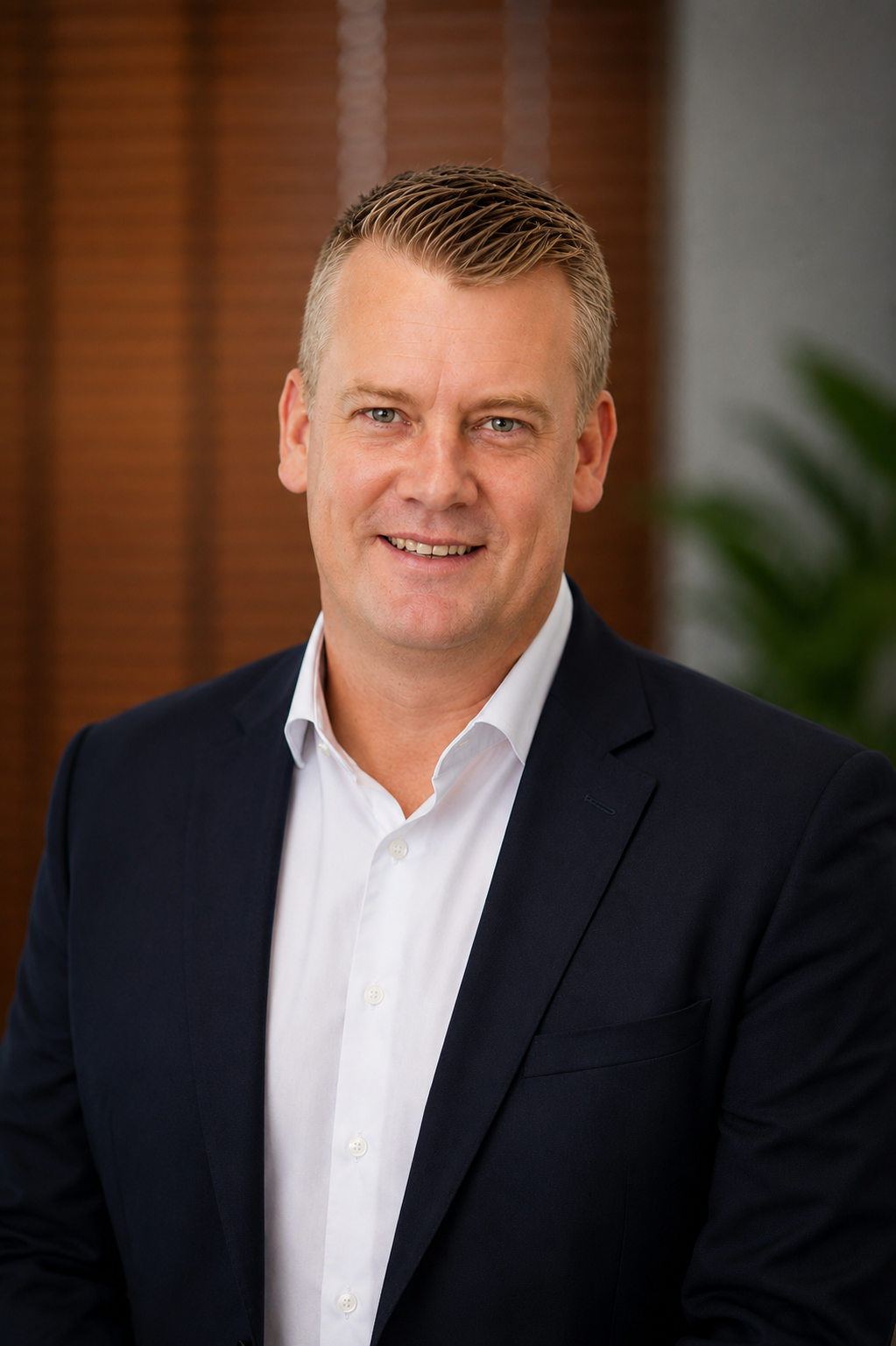
By Suzean Haumann
If you’ve parked your savings in a money market fund, you’re not alone. In fact, you’re part of a growing wave of South African investors who’ve chosen to play it safe.
After years of slow economic growth and a currency that swings like a pendulum, it’s understandable. When the financial world feels uncertain, safety sounds like the smartest option.
And the numbers prove it. According to industry statistics, South Africans have invested more than R988 billion – that’s over 30% of all local fund assets – into interest-bearing funds like money market investments.
Meanwhile, just 18.6% of those assets sit in equity funds, which are designed to grow wealth over time.
It’s a clear sign that investors are uncertain. But here’s the problem: playing it safe might be costing more than you realise.
When safety doesn’t beat inflation
Money market funds do what they promise: they aim to protect your capital and deliver a steady, low-risk return.
But those returns are often modest, and they can shrink quickly when interest rates drop.
Meanwhile, inflation doesn’t take a break. If your returns aren’t keeping up with rising prices, the real value of your money is actually falling.
You may not see it right away. But over months and years, the impact adds up. The money you worked hard to save might not stretch as far as you expected.
So what are your options? Stay in cash and risk falling behind, or take on more risk than you’re comfortable with?
There’s a middle ground. And it’s one that more people should know about.
What is an income fund?
An income fund is a type of interest-bearing investment, but it’s not the same as a money market fund.
While both aim for capital stability and regular income, income funds cast a wider net.
Money market funds stick to short-term instruments like Treasury bills and bank deposits.
These are extremely low-risk, but they also come with limited return potential – especially when rates are declining.
Income funds, on the other hand, invest in a broader mix of interest-paying assets.
These often include:
- Government bonds
- Corporate bonds
- Credit instruments
- And other fixed-income securities
Because of this broader approach, income funds are able to target higher returns than money market funds, while still managing risk carefully.

Think of it this way: Money market funds aim to keep your money still. Income funds aim to move it forward – steadily, and without stepping too far outside your comfort zone.
Why income funds might make more sense right now
- Better return potential: By investing in longer-term and higher-yielding instruments, income funds often earn more than money market funds – especially when interest rates start to drop.
- Inflation protection: While no fund can guarantee to beat inflation, income funds have historically delivered stronger real (after-inflation) returns over time.
- Professional oversight: Fund managers actively manage these portfolios. They respond to market conditions, adjust holdings when interest rates shift, and keep an eye on credit risk – so you don’t have to.
- Still relatively low risk: Income funds aren’t exposed to the same ups and downs as equity funds. They aim for stability, just with a bit more earning power.
The tax difference could also surprise you
Another often-overlooked benefit of income funds is how they’re taxed.
Here’s how money market and income funds compare, using a simple example of a R100,000 investment:
Money market fund
- All your return is treated as interest income, taxed at your full marginal rate (anywhere from 18% to 45%).
- Let’s say you earn interest of 7% a year. That’s R7,000 a year.
- If you’re under 65, your first R23,800 of interest is tax-free. So you’re taxed on R76,200, not the full R100,000.
- At a 27% tax rate, that’s R20,594 in tax over 10 years.
Income fund
- Let’s assume you earn 6% in annual distributions, split evenly between interest and dividends, plus 4% annual capital growth.
- The R3,000 dividend income is taxed at 20%: R600 per year.
- The R3,000 interest income falls below your exemption, so no tax on that.
- After 10 years, your investment gains R48,024 in capital growth.
- You get a R40,000 CGT exemption, leaving just R8,024 taxable.
- At a 30% tax rate, CGT comes to R962.
- Total tax over 10 years: just R6,962 – less than a third of the money market example.
So not only could you earn more with an income fund, you might also keep more of what you earn.
Is an income fund right for you?
If you’re saving for something in the next few months, money market funds might still be the right tool.
But if your investment horizon is one to two years, or longer, it may be time to consider a smarter alternative.
An income fund can give you the security you’re looking for, with a better shot at keeping your money growing ahead of inflation.
It’s not about chasing risky returns. It’s about making sure your savings don’t quietly fall behind.
I understand that deciding what to invest in can be overwhelming.
The role that advisors play with investors/ clients is to guide them and assure them that they are making the right decisions that will benefit them in retirement.
Do consult with an experienced, qualified advisor if you want to understand how to balance your investments for your long-term benefit.
* Suzean Haumann, CFP®, is head of Brenthurst Wealth Tyger Valley


 Megan joined the Brenthurst Wealth team in March 2026 as an Administrative and Fiduciary Services Assistant at our Val de Vie Office in the Western Cape. Prior to joining Brenthurst, Megan gained three years of experience in the retail sector, where she developed management and client service skills.


 I obtained my National Diploma in Financial Information Systems from the Cape Peninsula University of Technology in 1999 and have worked in the wealth management industry since January 2000. Over the years, I have gained extensive experience in various roles, including Portfolio Manager Assistant, Planner Assistant, and Paraplanner.
 Esmarelda Isaacs-Andreas joined the Brenthurst Wealth Stellenbosch office in October 2025, taking on the dual role of Receptionist and Fiduciary Administrator.
 I obtained my National Diploma in Financial Information Systems from the Cape Peninsula University of Technology in 1999 and have worked in the wealth management industry since January 2000. Over the years, I have gained extensive experience in various roles, including Portfolio Manager Assistant, Planner Assistant, and Paraplanner.
 Ashley joined Brenthurst Wealth in January 2025 as Office Administrative Assistant and Receptionist for the Stellenbosch Office.


 René Heystek joined Brenthurst Wealth in November 2023, as receptionist and administrative assistant in the newly established George/Garden Route office.
 Michelle Heystek has built a career in the financial services over the last two decades, after obtaining her B.Com degree in Financial Management in 2005. Once she joined Brenthurst in 2006, she continued her academic journey, obtaining her Certificate in Wealth Management from INSETA in 2007, followed by a Postgraduate Diploma in Financial Planning from the University of the Free State. In 2008, she earned the Certified Financial Planner (CFP®) designation.


 Anelle joined Brenthurst Wealth as a Receptionist and Administrative Assistant to Brian Butchart in the Cape Town office in December 2023. She has a wealth of knowledge from working as a liaison between Financial Advisers and clients at TMA and Absa Investment Management Services (Aims) since 1998. She obtained her B. com degree from the University of Port Elizabeth in 1997.


 ADMITTED ATTORNEY | FINANCIAL PLANNER & HEAD OF BRENTHURST FOURWAYS

 Sanet was appointed in April 2020, joining our Cape Town team as an Executive Administration Assistant to Renee Eagar. She has been in the financial services industry since 1990. Her previous experience includes positions at Sanlam, BJM and ABSA. She spent her last 12 years working at Alexander Forbes Private Client Wealth as a Senior Wealth Management Assistant. She has received numerous accolades over the years which include but not limited to, Alexander Forbes Client Service Excellence – Silver award in 2014,2015 and 2017. Sanet has also obtained her Certificate in Wealth Management (NQF 5) in 2012 and achieved “Best Student of the Year” from Moonstone.


 Maria Smit is a Certified Financial Planner® with over 10 years of experience in the financial planning industry.