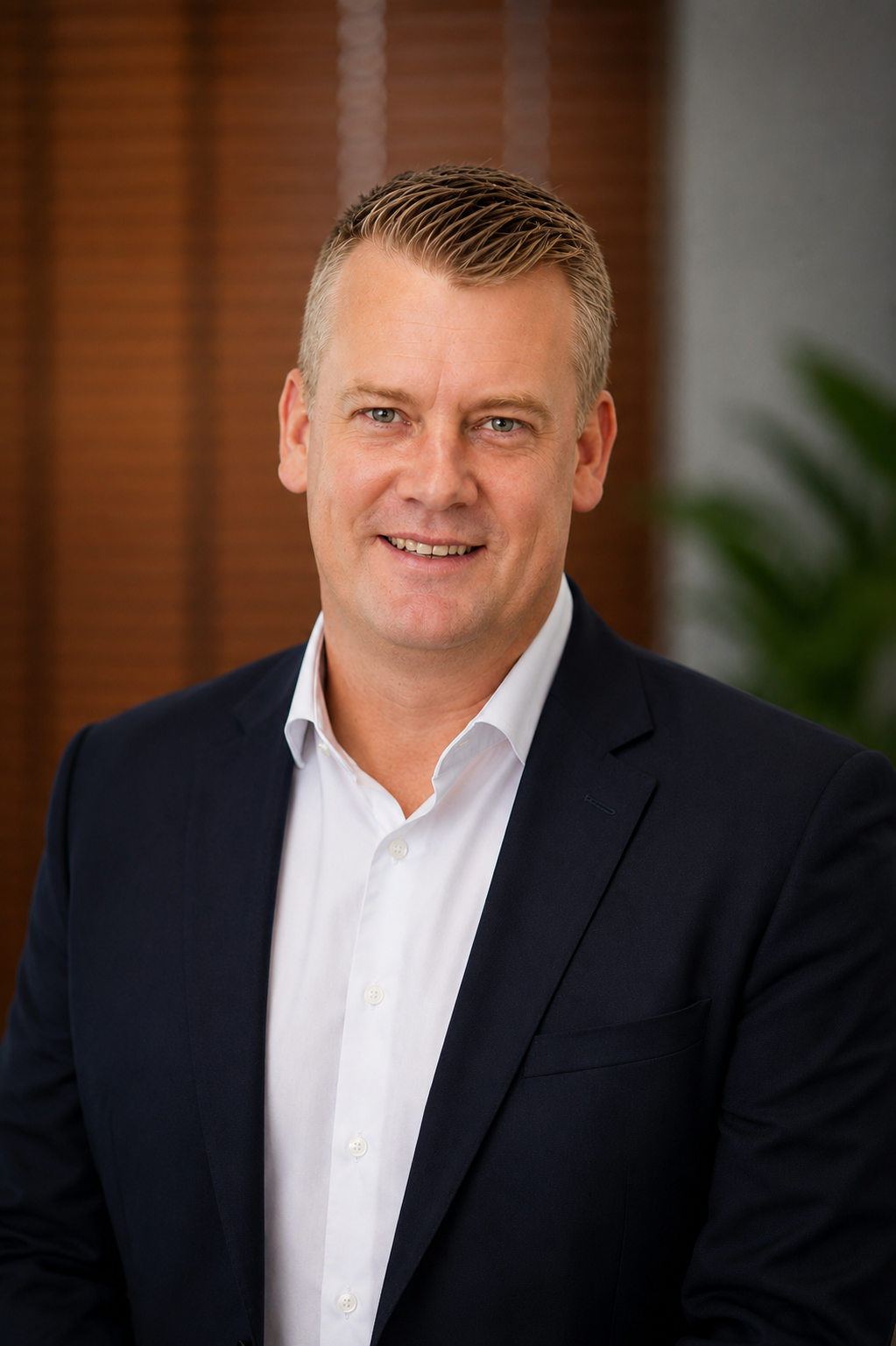
By Lloyd Uren*
It’s hard to ignore what’s happening in the Middle East. The conflict involving the US, Israel and Iran has raised serious concerns about oil supply, pushing prices into territory that has markets spooked.
If you’re feeling uneasy, that’s completely understandable. War creates uncertainty that fuels volatility, which eventually ends up affecting your pocket – both in the short and long term.
Right now, the real concern isn’t just higher oil prices, it’s the combination of rising prices and slowing global growth. That’s what economists call stagflation.
In simple terms, this means your cost of living rises while the economy struggles to grow. That’s a tough mix for any country, but for South Africa it’s even more complicated.
South Africa feels it twice
We import most of our fuel. So when oil prices climb, we pay more and if the Rand weakens at the same time, we pay even more.
Global conflict often pushes investors away from emerging markets. That can weaken the Rand, making imported goods, especially fuel, more expensive.
If oil stays near $100 per barrel and the Rand remains under strain, petrol prices could continue to rise. Once fuel increases, transport costs follow. Food prices usually move next.
For many households, there isn’t much room left in the budget. And a sudden jump in fuel and food prices feels like a hidden tax. That’s the stagflation trap: Higher costs, slower growth and very few easy solutions.
The Reserve Bank’s difficult choice
The war has placed South African Reserve Bank in a very difficult position. If it raises interest rates to fight inflation and protect the Rand, borrowing becomes more expensive. That puts pressure on homeowners and businesses.
If it keeps rates unchanged, the Rand could weaken further, pushing inflation even higher. Either way, the environment stays uncomfortable, which is why planning matters so much right now.
While it’s easy to focus on the negatives, we might have a slight silver lining.
South Africa exports commodities like gold and platinum group metals. In times of global stress, investors often move into gold as a safe haven, with higher commodity prices helping to support export earnings and boost government revenue.
That helps at a national level, but it doesn’t immediately lower your petrol bill. The benefits take time to filter through the economy, while higher fuel and food prices are felt almost immediately.
So while there’s some support in the system, you may still need to prepare for pressure in the short term.
What you can control
When the world feels unstable, it’s natural to want to react quickly. But long-term financial security is built on steady decisions, not emotional ones.
Here are some simple ways you can buffer your finances against unforeseen shocks.
Start with your debt. If interest rates stay high, expensive debt becomes even more dangerous. Focus on paying down what you can, especially short-term or unsecured loans. Avoid taking on new debt unless it’s absolutely necessary.
Next, review your budget honestly. What happens if fuel and food costs rise by 10 to 15 percent? Where can you reduce discretionary spending before you’re forced to? Small adjustments now are usually easier than drastic cuts later.
Then look at your investments. Market volatility during war and geopolitical tension is normal. Selling investments out of fear often locks in losses and reduces your ability to benefit when markets recover. Instead, make sure your portfolio is diversified and positioned for a range of outcomes, not just strong growth.
This may be the time to check whether your financial plan still works if inflation stays higher for longer and growth remains weak.
A steady response in uncertain times
The reality is that you can’t control events in the Middle East, nor oil prices or currency markets. But you can control how prepared you are.
Periods like this test confidence and discipline and often reveal whether your financial plan was built only for good times, or for all times.
If you’re feeling anxious, that’s normal. The headlines are unsettling, but uncertainty doesn’t mean you’re powerless.
My suggestion is to review your plan, tighten where needed and stay invested, but stay sensible. And if you need clarity, speak to a trusted financial adviser.
In times of global conflict, the most valuable quality isn’t speed or boldness. It’s resilience. And resilience starts with preparation.
*Lloyd Uren, financial advisor at Brenthurst Wealth Granger Bay, Cape Town, under direct supervision of Brian Butchart, CFP®.


 Megan joined the Brenthurst Wealth team in March 2026 as an Administrative and Fiduciary Services Assistant at our Val de Vie Office in the Western Cape. Prior to joining Brenthurst, Megan gained three years of experience in the retail sector, where she developed management and client service skills.


 I obtained my National Diploma in Financial Information Systems from the Cape Peninsula University of Technology in 1999 and have worked in the wealth management industry since January 2000. Over the years, I have gained extensive experience in various roles, including Portfolio Manager Assistant, Planner Assistant, and Paraplanner.
 Esmarelda Isaacs-Andreas joined the Brenthurst Wealth Stellenbosch office in October 2025, taking on the dual role of Receptionist and Fiduciary Administrator.
 I obtained my National Diploma in Financial Information Systems from the Cape Peninsula University of Technology in 1999 and have worked in the wealth management industry since January 2000. Over the years, I have gained extensive experience in various roles, including Portfolio Manager Assistant, Planner Assistant, and Paraplanner.
 Ashley joined Brenthurst Wealth in January 2025 as Office Administrative Assistant and Receptionist for the Stellenbosch Office.


 René Heystek joined Brenthurst Wealth in November 2023, as receptionist and administrative assistant in the newly established George/Garden Route office.
 Michelle Heystek has built a career in the financial services over the last two decades, after obtaining her B.Com degree in Financial Management in 2005. Once she joined Brenthurst in 2006, she continued her academic journey, obtaining her Certificate in Wealth Management from INSETA in 2007, followed by a Postgraduate Diploma in Financial Planning from the University of the Free State. In 2008, she earned the Certified Financial Planner (CFP®) designation.


 Anelle joined Brenthurst Wealth as a Receptionist and Administrative Assistant to Brian Butchart in the Cape Town office in December 2023. She has a wealth of knowledge from working as a liaison between Financial Advisers and clients at TMA and Absa Investment Management Services (Aims) since 1998. She obtained her B. com degree from the University of Port Elizabeth in 1997.


 ADMITTED ATTORNEY | FINANCIAL PLANNER & HEAD OF BRENTHURST FOURWAYS

 Sanet was appointed in April 2020, joining our Cape Town team as an Executive Administration Assistant to Renee Eagar. She has been in the financial services industry since 1990. Her previous experience includes positions at Sanlam, BJM and ABSA. She spent her last 12 years working at Alexander Forbes Private Client Wealth as a Senior Wealth Management Assistant. She has received numerous accolades over the years which include but not limited to, Alexander Forbes Client Service Excellence – Silver award in 2014,2015 and 2017. Sanet has also obtained her Certificate in Wealth Management (NQF 5) in 2012 and achieved “Best Student of the Year” from Moonstone.


 Maria Smit is a Certified Financial Planner® with over 10 years of experience in the financial planning industry.