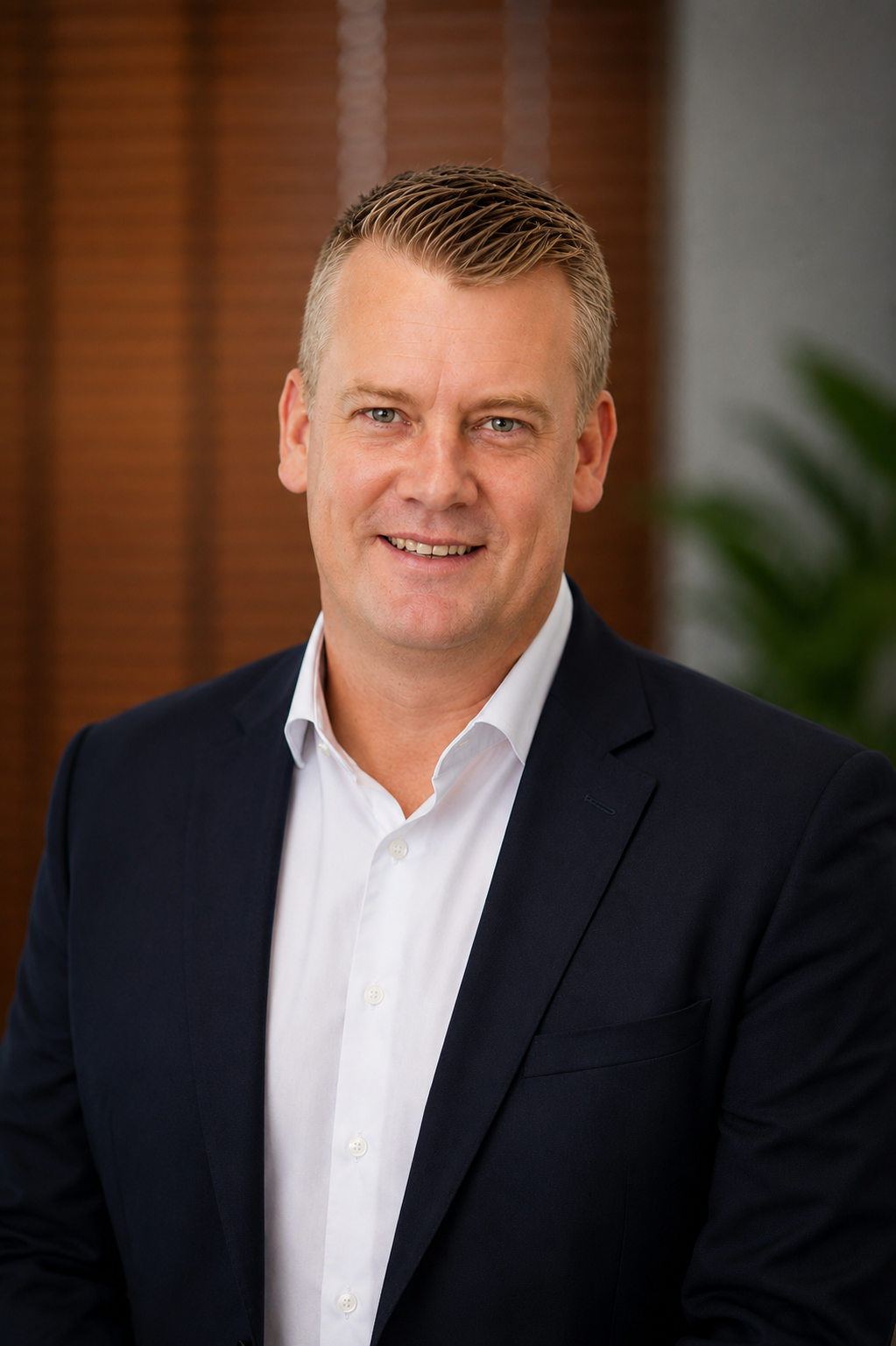
By Maria Smit*
Financial planning is full of quirky sayings and mantras that are designed to help simplify our thinking about key financial decisions. You might have heard of common phrases like ‘The 4% rule’, ‘Sell in May and go away’ or this old classic: ‘Time in the market beats timing the market’.
These help us make sense of what can seem like complex issues, and for the most part I’d say that it helps to listen to them and see whether they fit your circumstances. Because the problem with trying to reach everyone is that our individual circumstances don’t often match everyone else’s.
A good example of this is the so-called 10/5/3 rule. It suggests that, over the long term:
- Equities deliver around 10% per year
- Bonds deliver around 5% per year
- Cash delivers around 3% per year
It’s a neat rule of thumb, but from my standpoint, I don’t believe it’s relevant to South African investors.
Let me explain why I believe that, and how you should rather be thinking about the split of assets in your retirement portfolio.
Why the 10/5/3 rule struggles locally
South Africa is different from developed markets in a few important ways. For a start, inflation is higher and fluctuates more. This means that planning around higher real return assumptions can you’re your retirement plan look healthy on paper but fragile in reality.
Second, returns are volatile. Local equity markets do not deliver smooth compounding – they often deliver bursts of strong performance followed by long periods of frustration.
Lastly, cash and bonds behave differently in South Africa than in developed markets. You’re far more likely to get higher starting yields locally than in overseas, which significantly changes the role that income assets play in your portfolio.
In short, the 10/5/3 rule is overly optimistic in the context of South African portfolios because it isn’t aligned with the local realities.
My suggested South African rule of thumb
Given these disparaties, I use more conservative and realistic investment returns expectations with my clients.
Here it is: The 8/6/4 rule
- 8% from equities
This assumes a diversified mix of local and offshore shares. Not a pure JSE bet, and not a tech only portfolio pretending volatility doesn’t exist.
- 6% from bonds and income funds
This reflects South Africa’s higher yield environment, while acknowledging inflation risk, fiscal pressure, and interest rate cycles.
- 4% from cash
This is a reasonable pre-tax assumption. After tax and inflation, cash mostly preserves capital rather than grows it meaningfully.
This adjustment might look modest, but over a 20 to 30 year period, it makes a material difference to how realistic a retirement plan actually is.
The balanced portfolio reality check
If you’d rather work with one planning number instead of three separate assumptions, here is a practical shortcut.
For a balanced South African portfolio, a long-term return expectation of 5% to 7% nominal per year is reasonable.
That usually means you are holding roughly half to 60% in growth assets, with the rest in income assets and cash. It also assumes something more important than the asset split itself. Time. Enough time to ride through weak markets without abandoning the plan.
Because here is the uncomfortable truth: If your retirement plan only works when markets behave perfectly every year, it is not ambitious. It is fragile.
A good plan must survive bad years. Not just average ones.
Why rules of thumb still matter
At this point you might wonder whether rules of thumb are worth using at all. I’m here to tell you they are.
Not because they predict the future with precision, but because they shape expectations. And expectations shape behaviour.
A sensible rule of thumb can help to anchor your thinking to reality. It reminds you that even conservative portfolios fluctuate and it minimises your shock when markets don’t repeat last year’s strong returns.
The real value of a rule of thumb is not getting the decimal point exactly right, it’s about avoiding assumptions that can lead you astray.
The retirement risk most investors underestimate
In South Africa, the biggest long-term risk we face is not short-term volatility, it’s running out of income while inflation keeps rising.
That is why diversification beats prediction and long-term income sustainability matters more than headline returns. At the root of it all is the truth that discipline matters way more than clever market timing.
One way to stay diciplined is to remember that retirement planning is not about chasing the highest return in any given year. I regularly remind my clients that what matters is building a portfolio that can pay you reliably for 25 or 30 years.
That demands a strong dose of reality, and patience.
So, forget about the 10/5/3 and remember that conditions locally are very different. We cannot plan based on misplaced assumptions because you’re sure to be disappointed with the outcome compared to a locally-relevant asset split.
If investing were predictable, we’d all retire early and argue about padel instead of portfolios.
Until then, keeping it real remains one of the most valuable tools in your financial plan.
*Maria Smit CFP® professional is an advisor at Brenthurst Pretoria


 Megan joined the Brenthurst Wealth team in March 2026 as an Administrative and Fiduciary Services Assistant at our Val de Vie Office in the Western Cape. Prior to joining Brenthurst, Megan gained three years of experience in the retail sector, where she developed management and client service skills.


 I obtained my National Diploma in Financial Information Systems from the Cape Peninsula University of Technology in 1999 and have worked in the wealth management industry since January 2000. Over the years, I have gained extensive experience in various roles, including Portfolio Manager Assistant, Planner Assistant, and Paraplanner.
 Esmarelda Isaacs-Andreas joined the Brenthurst Wealth Stellenbosch office in October 2025, taking on the dual role of Receptionist and Fiduciary Administrator.
 I obtained my National Diploma in Financial Information Systems from the Cape Peninsula University of Technology in 1999 and have worked in the wealth management industry since January 2000. Over the years, I have gained extensive experience in various roles, including Portfolio Manager Assistant, Planner Assistant, and Paraplanner.
 Ashley joined Brenthurst Wealth in January 2025 as Office Administrative Assistant and Receptionist for the Stellenbosch Office.


 René Heystek joined Brenthurst Wealth in November 2023, as receptionist and administrative assistant in the newly established George/Garden Route office.
 Michelle Heystek has built a career in the financial services over the last two decades, after obtaining her B.Com degree in Financial Management in 2005. Once she joined Brenthurst in 2006, she continued her academic journey, obtaining her Certificate in Wealth Management from INSETA in 2007, followed by a Postgraduate Diploma in Financial Planning from the University of the Free State. In 2008, she earned the Certified Financial Planner (CFP®) designation.


 Anelle joined Brenthurst Wealth as a Receptionist and Administrative Assistant to Brian Butchart in the Cape Town office in December 2023. She has a wealth of knowledge from working as a liaison between Financial Advisers and clients at TMA and Absa Investment Management Services (Aims) since 1998. She obtained her B. com degree from the University of Port Elizabeth in 1997.


 ADMITTED ATTORNEY | FINANCIAL PLANNER & HEAD OF BRENTHURST FOURWAYS

 Sanet was appointed in April 2020, joining our Cape Town team as an Executive Administration Assistant to Renee Eagar. She has been in the financial services industry since 1990. Her previous experience includes positions at Sanlam, BJM and ABSA. She spent her last 12 years working at Alexander Forbes Private Client Wealth as a Senior Wealth Management Assistant. She has received numerous accolades over the years which include but not limited to, Alexander Forbes Client Service Excellence – Silver award in 2014,2015 and 2017. Sanet has also obtained her Certificate in Wealth Management (NQF 5) in 2012 and achieved “Best Student of the Year” from Moonstone.


 Maria Smit is a Certified Financial Planner® with over 10 years of experience in the financial planning industry.