Hedge funds are supposed to factor in exactly what the name suggests – hedge a portfolio against a certain unknown and/or undesired future outcome. Hedge funds are normal unit trust funds, with a specific mandate in how the fund is being managed, and the type of securities they hold.
The general investor tends to have a negative bias towards hedge funds, in the sense that they might be over-complicated, not regulated, and the list goes on. This however is not the case. Hedge funds perform a very particular function within a diversified portfolio and should most definitely not be thrown out the window.
What exactly is a hedge fund?
A hedge fund can take on the simple form of a unit trust, in which various securities are traded. A hedge fund, however, has a very wide mandate relative to a normal unit trust fund that simply buys stocks based on technical- and fundamental analysis and sits on these holdings for a certain period to outperform the general market and beat inflation.
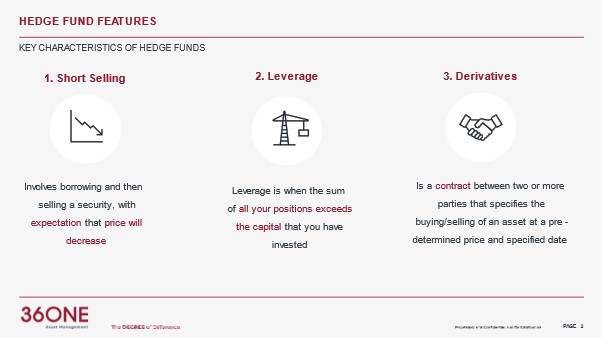
Hedge funds implement a wide range of securities being traded, risk management techniques etc. For example, a hedge fund can implement strategies such as short selling (which is the opposite of being long on a stock), pair trades, and derivatives to name a few. These strategies enable hedge funds to generate superior returns in bear markets and declining economic environments and may generate great real returns irrespective of the general market direction.
A long call is a call option that is betting that the underlying stock is going to increase in value before its expiration date.
A short call is an options position taken as a trading strategy when a trader believes that the price of the asset underlying the option will drop.
Hedge fund managers have a ‘bigger toolbox’ at their disposal and have more ways to manage risk and returns than simply trying to hold the right assets/shares to generate superior returns. By nature, hedge funds are more active-managed funds than standard equity funds, and hedge fund managers will trade and change their positions in the fund on a more frequent basis. An important factor to remember is that hedge funds are not benchmarked cognisant and these funds typically seek absolute returns.

How safe are hedge funds?
As mentioned above, hedge funds take on the same structure as unit trust funds – which are considered safe investment options. South Africa became the first country globally to put in place comprehensive regulations for hedge fund products in April 2015. Initially, these funds got a bad stigma to them as they were not regulated, but the landscape changed drastically over the last 10+ years. Because of these changes and regulations, it is now an option that should be considered as part of a diversified portfolio, especially in bear market cycles.
Investors need to remember, there is a difference between ‘safe’ and ‘volatile’ – do not confuse these two with each other. By nature, most hedge funds will experience a higher degree of volatility, but this does not imply that a hedge fund is not a safe investment case. In fact, in bear markets (current 2022 market as an example), hedge funds tend to strongly outperform the general market and most asset classes on average (and yes – including cryptos!)
It is a growing investment option, at the end of 2020, the SA Hedge Fund industry closed with assets under management of R73.27 billion. Statistics released by the Association for Savings and Investment South Africa (Asisa) showed that it increased by R4.35 billion in 2020 from R68.92 billion under management at the end of 2019.
Special considerations to hedge funds
As discussed above, hedge funds operate with a higher mandate than unit trust funds and therefore use more tools and options within the fund. Due to this, the return profiles of hedge funds can differ significantly from normal unit trusts and investors need to be clear on the objective of the hedge funds. Remember, not all hedge funds have the same mandates – each fund manager will manage the fund based on their research and views. The wider the mandates and ‘toolbox’ used by the fund manager; the more risk exposures are being built into the fund. It is exactly these risks the fund is exposed to that drive the opportunity for superior returns in volatile and negative markets.
Hedge funds can correlate with more traditional investments in the short term and require the investor to be able to sit tight through various market cycles. Below is a great example of what hedge funds try to achieve in especially negative market cycles. Hedge funds tend to have a negative correlation compared to the general equity market, which is the exact reason why hedge funds should be strongly considered as a part of a diversified portfolio. Hedge funds provide a different depth of diversification outside merely asset class or geographic diversification. This provides diversification in terms of how the underlying holdings are bought and held. Therefore, hedge funds (when used as a part of your portfolio) actually bring down the level of volatility and risk in the underlying portfolio by building in uncorrelated returns in different market cycles.

Fund capacity in hedge funds also tends to be smaller due to the active management style. This also raises slightly higher fund manager fees due to the amount of time and effort fund managers spend managing these funds.
How do you select the best possible hedge fund?
Selecting the best possible hedge fund to build into a portfolio is no easy task, therefore there is a couple of things to delve into. Choosing a manager based on their past track record is important, but there are other factors to consider:
Investment objective:
- What is the manager trying to achieve?
- Lower volatility or enhanced return?
- Decreased correlation?
Team:
- What are the management team’s makeup, experience, and culture?
Risk management:
- Historical gross, net exposure, and drawdowns?
- Ability to adjust exposure? (Flexibility of the fund)
Operations:
- Does the fund have sound operational infrastructure backed by a dedicated support team?
As with all investment decisions, it is advisable to consult with an accredited, qualified financial advisor to select investment options best suited to your needs.
* Article was written jointly by Suzean Haumann and Ruan Breed.


 Megan joined the Brenthurst Wealth team in March 2026 as an Administrative and Fiduciary Services Assistant at our Val de Vie Office in the Western Cape. Prior to joining Brenthurst, Megan gained three years of experience in the retail sector, where she developed management and client service skills.


 I obtained my National Diploma in Financial Information Systems from the Cape Peninsula University of Technology in 1999 and have worked in the wealth management industry since January 2000. Over the years, I have gained extensive experience in various roles, including Portfolio Manager Assistant, Planner Assistant, and Paraplanner.
 Esmarelda Isaacs-Andreas joined the Brenthurst Wealth Stellenbosch office in October 2025, taking on the dual role of Receptionist and Fiduciary Administrator.
 I obtained my National Diploma in Financial Information Systems from the Cape Peninsula University of Technology in 1999 and have worked in the wealth management industry since January 2000. Over the years, I have gained extensive experience in various roles, including Portfolio Manager Assistant, Planner Assistant, and Paraplanner.

 Ashley joined Brenthurst Wealth in January 2025 as Office Administrative Assistant and Receptionist for the Stellenbosch Office.


 René Heystek joined Brenthurst Wealth in November 2023, as receptionist and administrative assistant in the newly established George/Garden Route office.

 Michelle Heystek has built a career in the financial services over the last two decades, after obtaining her B.Com degree in Financial Management in 2005. Once she joined Brenthurst in 2006, she continued her academic journey, obtaining her Certificate in Wealth Management from INSETA in 2007, followed by a Postgraduate Diploma in Financial Planning from the University of the Free State. In 2008, she earned the Certified Financial Planner (CFP®) designation.


 Anelle joined Brenthurst Wealth as a Receptionist and Administrative Assistant to Brian Butchart in the Cape Town office in December 2023. She has a wealth of knowledge from working as a liaison between Financial Advisers and clients at TMA and Absa Investment Management Services (Aims) since 1998. She obtained her B. com degree from the University of Port Elizabeth in 1997.


 ADMITTED ATTORNEY | FINANCIAL PLANNER & HEAD OF BRENTHURST FOURWAYS


 Sanet was appointed in April 2020, joining our Cape Town team as an Executive Administration Assistant to Renee Eagar. She has been in the financial services industry since 1990. Her previous experience includes positions at Sanlam, BJM and ABSA. She spent her last 12 years working at Alexander Forbes Private Client Wealth as a Senior Wealth Management Assistant. She has received numerous accolades over the years which include but not limited to, Alexander Forbes Client Service Excellence – Silver award in 2014,2015 and 2017. Sanet has also obtained her Certificate in Wealth Management (NQF 5) in 2012 and achieved “Best Student of the Year” from Moonstone.


 Maria Smit is a Certified Financial Planner® with over 10 years of experience in the financial planning industry.