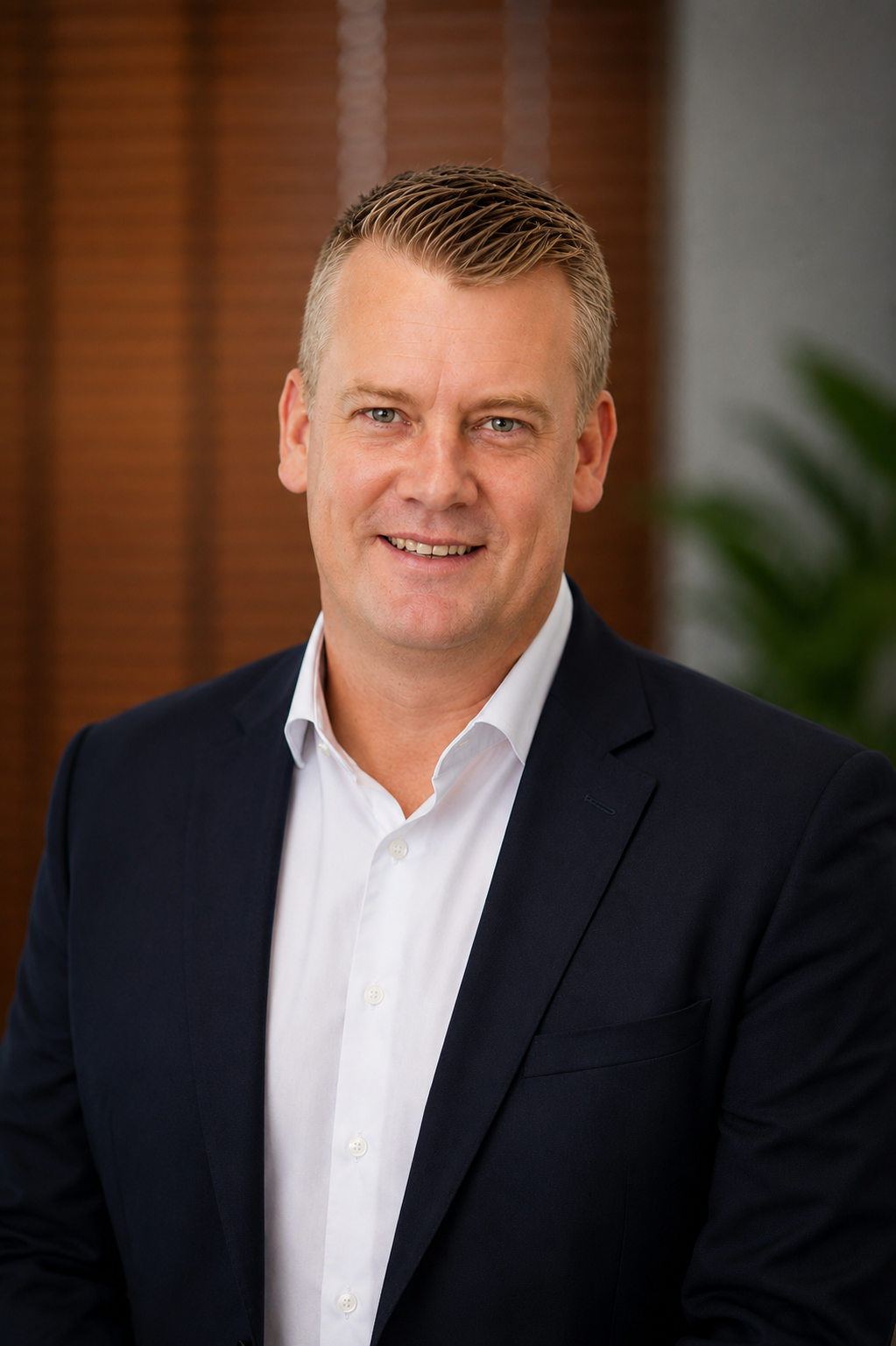
By Ruan Breed *
For decades, the FTSE/JSE All Share, the S&P 500 and the MSCI World have served as the yardsticks against which many every portfolios are measured. Managers are hired against them, fired against them, and remunerated against them. The question worth asking in 2026 is whether those yardsticks still measure what we think they do.
The concentration problem
The original case for a market cap weighted index was simple. It gave you cheap, diversified exposure to a broad opportunity set. That premise no longer holds the way it used to.
By the end of 2025, the top ten holdings in the S&P 500 accounted for close to 40% of the index, up from roughly 20 to 28% between 1990 and 2010. Seven US technology names, the so called Magnificent 7, drove the bulk of returns. The Russell 1000 Growth is even more lopsided, with its top ten contributing around three quarters of 2025’s calendar year return. The MSCI World, which many South African investors hold for “global” exposure, derives almost 70% of its weight from a single country and around 27% from just ten stocks.
Is JSE any different? Think again.
The JSE is arguably the more extreme case. Naspers and Prosus together still sit at close to 20% of the Top 40, and the top ten names hover around two thirds of the index. When a investor buys “broad SA equity” through a Top 40 tracker, what they are actually buying is a geared bet on Tencent, two or three banks and a handful of resource counters. Especially the latter.

Why this matters (mechanically)
A market cap weighted index is, by construction, a momentum vehicle. As prices rise, passive flows must buy more of what has already gone up to maintain weights. When prices fall, the same flows reverse. That reflex amplifies both ways. The index stops behaving as a market proxy and starts behaving as a thematic fund – something we have seen taking shape more and more. It is momentum and volume more than anything else.
This is not a forecast. It is arithmetic. And it is global. Brown Advisory’s recent research notes top ten concentration of 62% in Germany, 57% in France and 47% in China. Rising concentration is not a US story; it is the story.
What it means for portfolio management
Three practical implications follow.
Performance evaluation needs more nuance. Judging an active manager against a hyper concentrated index in a year when seven stocks did the heavy lifting will almost always make a properly diversified manager look weak. That is not failure; it is the benchmark behaving badly. The honest comparison is against the manager’s stated opportunity set, peer group, and risk adjusted return. How does an index make certain adjustments to protect capital? It doesn’t.
Risk has to be measured separately. Investors benchmarked solely to the JSE Top 40 is, whether they realise it or not, accepting that close to a quarter of their domestic equity risk sits in one counter. That is a conversation worth having before the next drawdown, not after. Active share, sector exposure, and stress tested drawdowns tell you more about real risk than tracking error ever will.
Goal alignment matters more than relative ranking. Most investors are not trying to beat an index. They are funding retirement, preserving capital after a business sale, matching a living annuity drawdown, or hedging rand risk. For those mandates, absolute return targets such as CPI plus 5%, drawdown limits and liability matching are more meaningful measures of success than a quarterly horse race. Sequencing risk also comes to mind.
The maths reinforces this. A portfolio that falls 33% must rise 50% just to break even. Avoiding deep losses compounds wealth more reliably over time than chasing every rally, even if it means lagging during speculative phases. For what it’s worth, it also makes you sleep better at night.
So, are benchmarks still relevant?
Yes, but in a narrower role than the industry often assigns them. A benchmark is a useful reference point. It is a poor proxy for the economy, a worse proxy for an opportunity set, and a dangerous one to confuse with an investor’s actual objective.
We still measure performance against indices because investors and trustees expect it and because comparability matters. We pair that with absolute return targets, peer group context, downside metrics, and a clear view on what each portfolio is meant to achieve. The discipline is to use the benchmark as the gauge, not the goal.
The more useful question in today’s markets is not “did we beat the index?” It is “did the portfolio do its job?”
* Ruan Breed is a financial adviser at Brenthurst Wealth Stellenbosch


 Megan joined the Brenthurst Wealth team in March 2026 as an Administrative and Fiduciary Services Assistant at our Val de Vie Office in the Western Cape. Prior to joining Brenthurst, Megan gained three years of experience in the retail sector, where she developed management and client service skills.


 I obtained my National Diploma in Financial Information Systems from the Cape Peninsula University of Technology in 1999 and have worked in the wealth management industry since January 2000. Over the years, I have gained extensive experience in various roles, including Portfolio Manager Assistant, Planner Assistant, and Paraplanner.
 Esmarelda Isaacs-Andreas joined the Brenthurst Wealth Stellenbosch office in October 2025, taking on the dual role of Receptionist and Fiduciary Administrator.
 I obtained my National Diploma in Financial Information Systems from the Cape Peninsula University of Technology in 1999 and have worked in the wealth management industry since January 2000. Over the years, I have gained extensive experience in various roles, including Portfolio Manager Assistant, Planner Assistant, and Paraplanner.
 Ashley joined Brenthurst Wealth in January 2025 as Office Administrative Assistant and Receptionist for the Stellenbosch Office.



 René Heystek joined Brenthurst Wealth in November 2023, as receptionist and administrative assistant in the newly established George/Garden Route office.
 Michelle Heystek has built a career in the financial services over the last two decades, after obtaining her B.Com degree in Financial Management in 2005. Once she joined Brenthurst in 2006, she continued her academic journey, obtaining her Certificate in Wealth Management from INSETA in 2007, followed by a Postgraduate Diploma in Financial Planning from the University of the Free State. In 2008, she earned the Certified Financial Planner (CFP®) designation.


 Anelle joined Brenthurst Wealth as a Receptionist and Administrative Assistant to Brian Butchart in the Cape Town office in December 2023. She has a wealth of knowledge from working as a liaison between Financial Advisers and clients at TMA and Absa Investment Management Services (Aims) since 1998. She obtained her B. com degree from the University of Port Elizabeth in 1997.


 ADMITTED ATTORNEY | FINANCIAL PLANNER & HEAD OF BRENTHURST FOURWAYS

 Sanet was appointed in April 2020, joining our Cape Town team as an Executive Administration Assistant to Renee Eagar. She has been in the financial services industry since 1990. Her previous experience includes positions at Sanlam, BJM and ABSA. She spent her last 12 years working at Alexander Forbes Private Client Wealth as a Senior Wealth Management Assistant. She has received numerous accolades over the years which include but not limited to, Alexander Forbes Client Service Excellence – Silver award in 2014,2015 and 2017. Sanet has also obtained her Certificate in Wealth Management (NQF 5) in 2012 and achieved “Best Student of the Year” from Moonstone.


 Maria Smit is a Certified Financial Planner® with over 10 years of experience in the financial planning industry.